


Key Takeaways
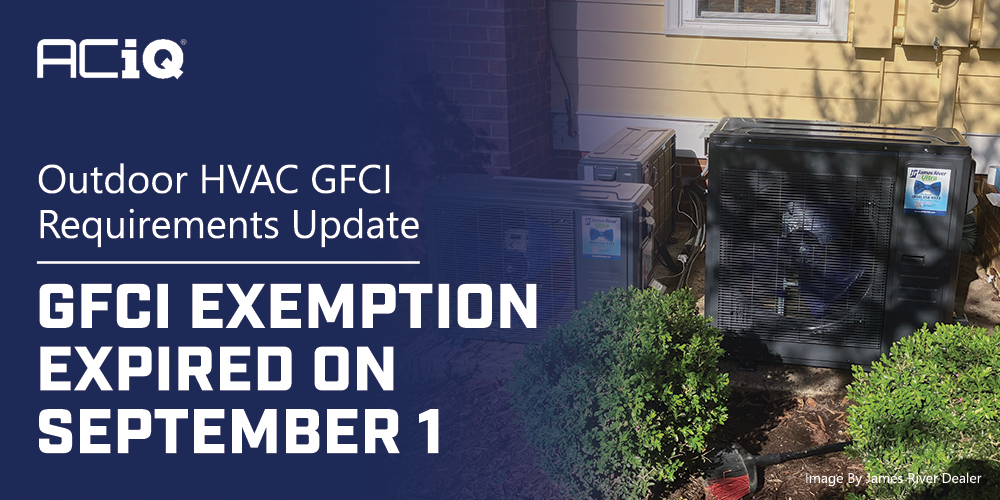
- GFCI Requirements Changed: The HVAC industry’s temporary exemption from outdoor GFCI requirements has expired, meaning many jurisdictions now require GFCI protection for listed outdoor HVAC equipment.
- Location Matters: Requirements vary by state and local jurisdiction. Some states have delayed, amended, or removed the requirement, making it critical to verify local code adoption before bidding or installing equipment.
- Nuisance Tripping Remains a Challenge: Some single-speed, variable-speed, and inverter-driven equipment can still trip GFCI devices, even when installed correctly.
- Cross-Industry Collaboration Is Necessary: Contractors should coordinate early with electricians and inspectors to avoid failed inspections, delays, and costly callbacks related to GFCI compliance.
- Manufacturer Instructions Become Essential: Following manufacturer installation instructions is more important than ever, especially as high-efficiency inverter systems become more common and electrical requirements continue to evolve.
Electrical safety requirements continue to evolve, creating new considerations for HVAC contractors across the country. With the expiration of the National Electrical Code (NEC) exemption for outdoor HVAC equipment, contractors may encounter new GFCI protection requirements that can impact installation planning, inspections, and system startup.
For HVAC contractors, the challenge is not simply understanding the code. It’s understanding how changing GFCI requirements affect installations, inspections, callbacks, and long-term equipment performance. As regulations evolve, contractors are increasingly looking for HVAC systems that simplify installation, support code compliance, and help reduce unnecessary service visits.
What is GFCI Protection?
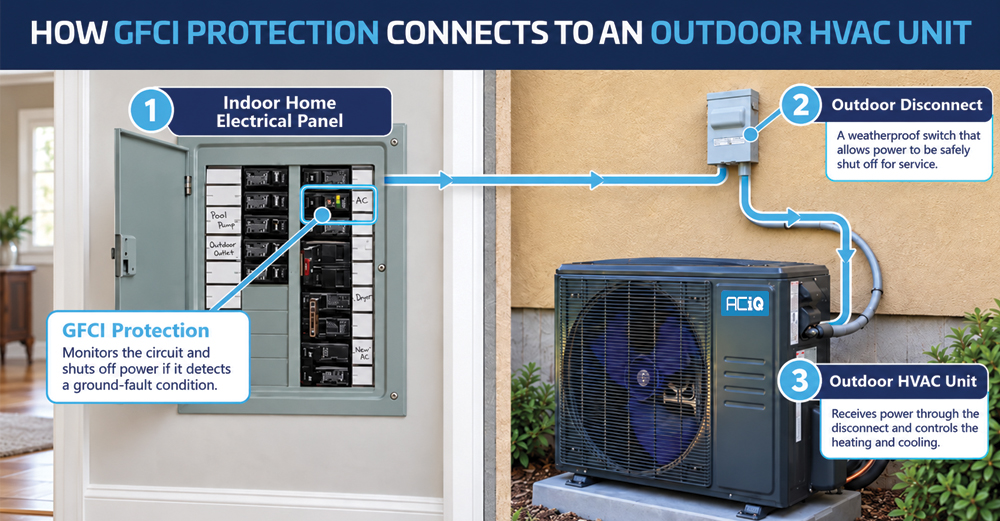
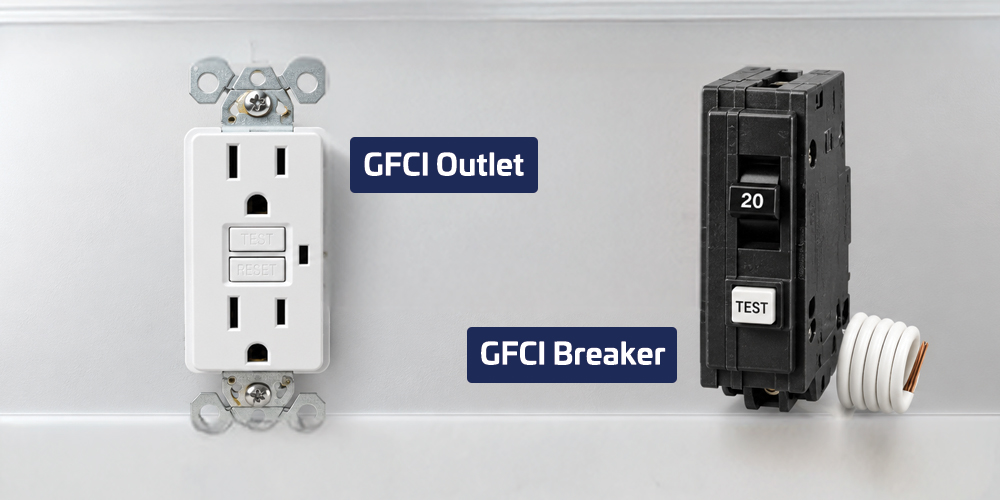
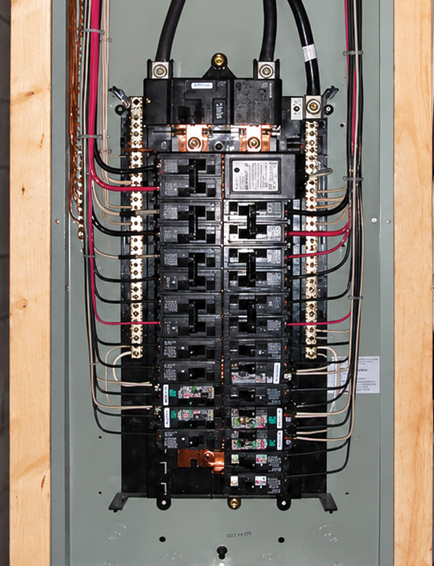
Ground-fault circuit interrupter (GFCI) protection is designed to reduce the risk of electrical shock by shutting off power when it detects an imbalance between incoming and outgoing current. Historically, GFCI protection has been required in areas where electricity and moisture are likely to coexist, such as kitchens, bathrooms, garages, and outdoor locations.
For HVAC contractors, GFCI requirements had largely stayed in the electrician’s lane. That changed when the NEC expanded GFCI requirements for outdoor outlets and began addressing equipment connected to those circuits.
What Changed for GFCI Requirements?
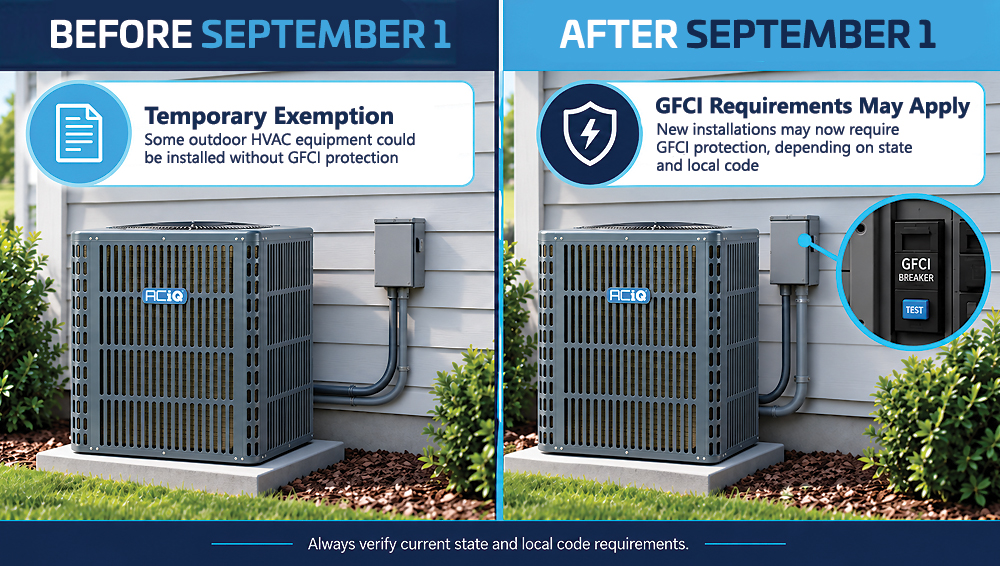
One of the most significant recent code developments for the HVAC industry is the expiration of the temporary exemption that had allowed listed outdoor HVAC equipment to avoid GFCI protection requirements while manufacturers, code bodies, and industry organizations worked to address compatibility concerns. According to ACCA, that exemption expired on September 1, 2026, and contractors in many jurisdictions may now encounter requirements for GFCI protection on listed outdoor HVAC equipment.
The situation is complicated because code adoption is not uniform across the country. Approximately 22 states have delayed, amended, or removed the requirement, while others enforce it or have not adopted a code edition that includes it. As a result, requirements can vary significantly depending on where you’re working.
The key takeaway is simple: The same installation may have different GFCI requirements depending on the jurisdiction.
Why Contractors Are Paying Close Attention
One ongoing challenge associated with the new requirements is the potential for nuisance tripping on certain HVAC systems. Industry organizations, including ACCA and AHRI, have continued to advocate for additional time and further testing because some equipment can trip standard GFCI devices even when there is no installation defect or safety hazard present.
Reports of nuisance tripping have involved:
- Single-speed outdoor equipment
- Variable-speed equipment
- Inverter-driven heat pumps and air conditioners
Some newer high-frequency GFCI technologies are entering the market, but industry groups indicate these solutions have not yet accumulated extensive field experience across the wide variety of HVAC equipment operating in different climates and applications.
For contractors, that creates a difficult balancing act between code compliance and ensuring reliable system operation.
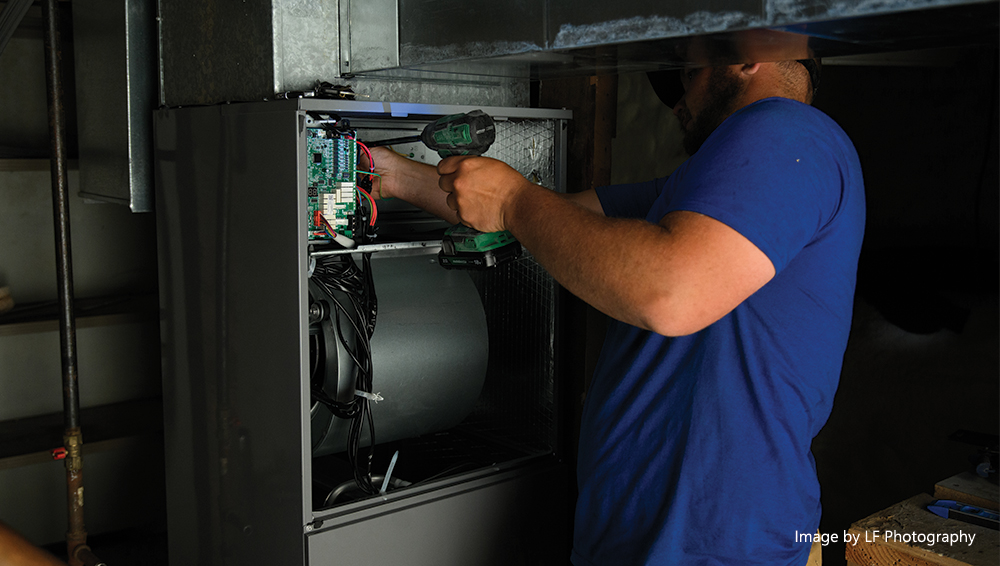
What the New GFCI Requirements Mean for Contractors on the Job
Whether you’re installing a heat pump, inverter condenser, or traditional split-system air conditioner, GFCI protection may now be part of the conversation much earlier in the project.
Contractors should expect increased project coordination and communication with experts in other industries, including:
- Electrical contractors
- Building inspectors
- Plan reviewers
- Local code officials
Rather than treating electrical requirements as a final inspection item, many contractors are now verifying adopted code editions before installation begins.
Doing so can help avoid:
- Failed inspections
- Project delays
- Unexpected material costs
- Return trips and callbacks
For contractors, reducing installation complexity is more important than ever. ACiQ equipment is designed with installation simplicity in mind, helping contractors streamline commissioning and adapt to evolving electrical and mechanical code requirements.
Why Should You Verify Local GFCI Requirements Before You Quote?
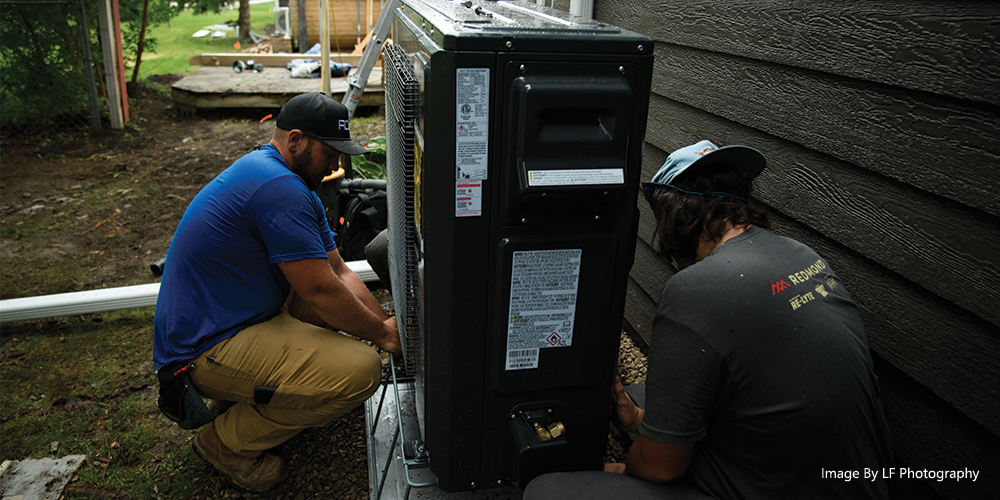
One of the most important lessons from the recent GFCI changes is that contractors cannot assume requirements are consistent from one jurisdiction to another.
ACCA specifically notes that NEC adoption and enforcement occur at the state and local level, and that requirements may vary depending on local amendments or enforcement decisions.
Before bidding or installing equipment, contractors should:
- Verify which NEC edition is currently enforced.
- Check for state or local amendments.
- Confirm inspection requirements.
- Coordinate with the project’s electrician when applicable.
A few minutes of research up front can prevent significant issues later in the project.
Why Equipment Selection Matters More Than Ever
As inverter technology becomes increasingly common, contractors are installing equipment that offers higher efficiency, improved comfort control, and lower operating costs. ACiQ’s inverter-driven heating and cooling solutions are designed with installation simplicity, efficient operation, and long-term reliability in mind, helping contractors meet customer expectations while adapting to changing industry requirements.
At the same time, evolving electrical requirements make it increasingly important to follow manufacturer installation instructions and electrical specifications exactly as written.
Whenever GFCI requirements are involved, contractors should review:
- Product installation manuals
- Technical bulletins
- Local code requirements
- Manufacturer recommendations
This helps ensure compliance while reducing the risk of troubleshooting issues later.
Best Practices for HVAC Contractors Following the New GFCI Requirements
The HVAC industry is continuing to work through the practical impact of these code changes, and additional developments are likely as manufacturers, code officials, and trade organizations gather more field data.
In the meantime, successful contractors are taking a proactive approach by:
- Staying informed about NEC updates
- Tracking local code adoption
- Training installation teams
- Communicating early with electrical trades
- Documenting compliance decisions for each project
These steps can help minimize surprises while keeping projects moving efficiently.
Beyond staying current on code updates, many contractors are standardizing on equipment platforms that help create consistency across installations. ACiQ’s familiar equipment, straightforward controls, and predictable commissioning procedures can improve efficiency for both service technicians and installers, and ACiQ’s technical support can help contractors adjust to industry changes.
Why Contractors Choose ACiQ in Response to the New GFCI Requirements
The expiration of the outdoor HVAC GFCI exemption is creating new installation considerations for contractors across the industry. As local jurisdictions adopt and enforce updated requirements, staying informed is essential to avoid installation delays, failed inspections, and costly callbacks.
ACiQ is built around helping contractors navigate changes like these with confidence. Along with offering inverter-driven systems designed for straightforward installation and dependable performance, ACiQ supports HVAC contractors with reliable product availability, responsive technical support, and practical resources that help keep projects moving forward.
As electrical and HVAC requirements continue to evolve, contractors need more than equipment alone. They need a partner that understands the realities of the field and is committed to helping their business succeed. ACiQ remains focused on delivering solutions that support installation efficiency, long-term reliability, and profitable growth for contractors. Become an ACiQ Dealer today to get access to ACiQ technical support and dealer resources.
Related Articles
Data Centers & Rising Electrical Costs – How ACiQ Can Help You Combat Rising Costs
Learn how growing data center and AI electricity demand may contribute to rising electrical costs, and how high-efficiency ACiQ HVAC systems can help homeowners reduce energy use and manage utility expenses.

Prepare for HVAC Freight Delays with Limited Time ACiQ Special Pricing on Qualifying Stocking Orders
Ongoing HVAC freight delays can make equipment delivery times harder to predict. Learn how stocking frequently installed ACiQ systems and taking advantage of special pricing on qualifying orders over $10,000 can help protect installation schedules, reduce last-minute shipping risks, and prepare your business for upcoming demand.

HVAC Upselling Opportunities for ACiQ Dealers
Learn how HVAC upselling opportunities can increase your profit without more jobs. Discover proven strategies to upsell ACiQ high-efficiency systems, smart technology, and add-ons that improve customer satisfaction while maximizing revenue on every install.